
What can be deducted from a rental deposit
October 22, 2026 · By Smarter Facility
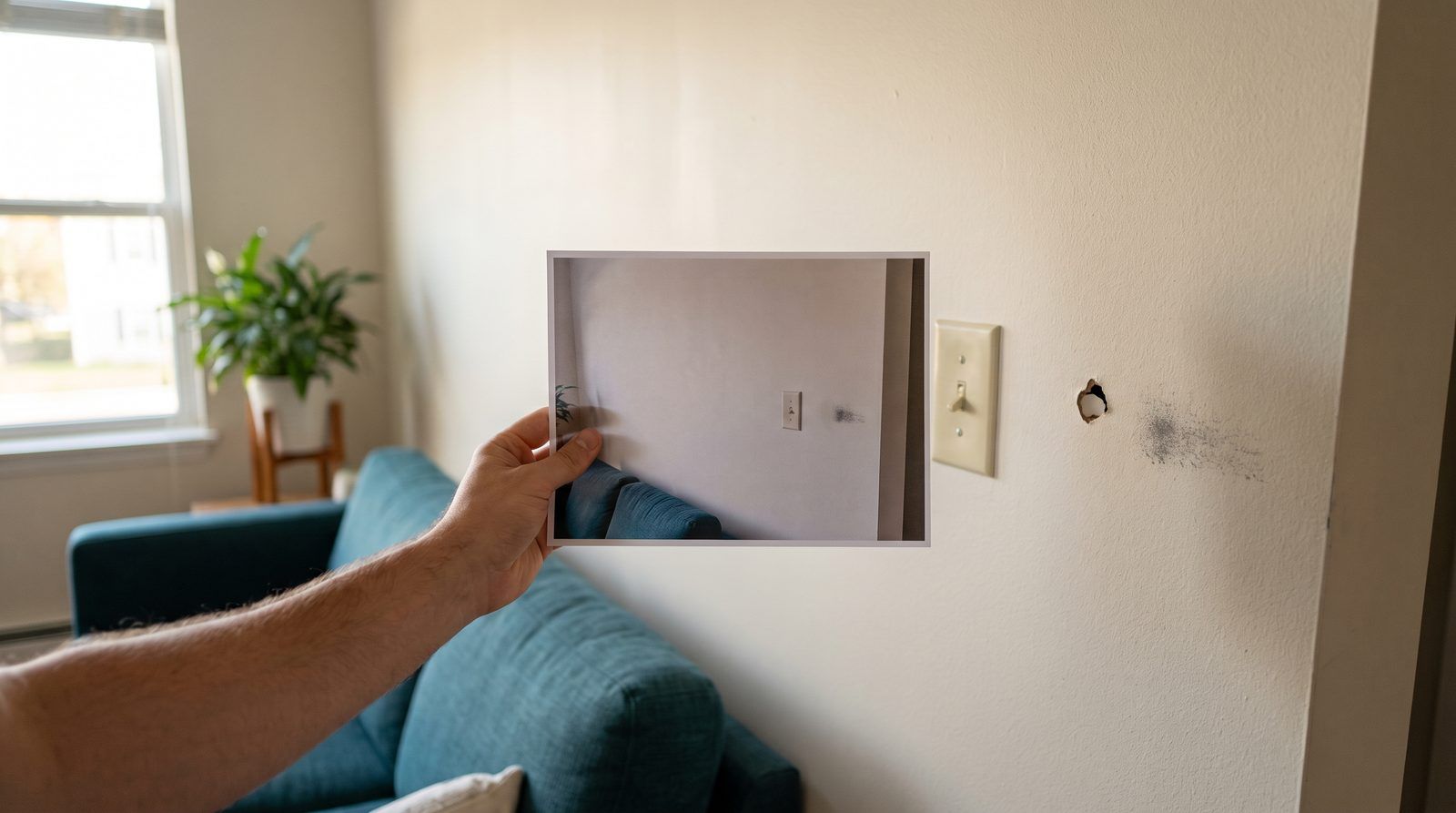
Which costs can be deducted from the deposit, how to tell damage from normal wear and tear, and which documents to prepare at move-in.
The deposit can cover unpaid rent, unpaid utility bills for the rental period, missing items and damage beyond normal wear and tear. A deduction is defensible only if the lease provides that the deposit covers that cost and the move-in inventory shows the item was in a different condition.
Before you walk through the property, test every planned deduction with three questions. Does the lease name this kind of cost? Does the move-in inventory show the item was in a different condition? Do you have a document for the amount? If the answer to any of them is no, that is the deduction the tenant will dispute. For the deposit as a whole, from signing the lease to returning it, see how the rental deposit works.
When a deposit deduction is justified and when it is not
A deduction is justified when it covers an unmet obligation under the lease (unpaid rent, utility bills or damage beyond normal wear and tear), the lease allows that cost and you can prove it. At move-out there are usually several such costs, so judge each one separately, not the total.
Seven kinds of cost are deducted most often. For each there are three things to know: when it is deducted, when it is not and what proves it.
- Unpaid rent. Deducted when rent for a period under the lease is unpaid at move-out and the lease says the deposit covers rent. Not deducted when the rent is paid or the claim rests on an increase the lease does not provide for. Proved by a bank statement and the deposit clause.
- Utility bills and building charges. Deducted when the cost relates to the rental period and the lease assigns it to the tenant. Not deducted when the lease assigns it to the landlord. Proved by the signed meter readings at move-out and the bills for the period.
- Damage. Deducted when the move-out inventory shows a change from the move-in inventory that goes beyond normal wear and tear. Not deducted when the item was already in that condition at move-in or the change is normal wear and tear. Proved by the entries for the item in both inventories, with photos.
- Missing items. Deducted when the item is on the furnishings inventory and is missing at move-out. Not deducted when the item was never listed or was removed with the landlord's written consent. Proved by the line for the item in the signed inventory.
- Cleaning. Deducted when the lease sets the condition in which the property is returned and at move-out it is dirtier than at move-in. Not deducted when the landlord wants a higher standard of cleanliness than at move-in. Proved by the return-condition clause and photos from move-in and move-out.
- Repainting. Deducted when damage made it necessary: holes, stains, burns. Not deducted when it is the usual refresh between two tenants. Proved by photos of the damage that made it necessary.
- Appliance or installation failure. Deducted when the documents show the tenant misused it. Not deducted when the appliance stopped working from age or a defect. Proved by the tenant's report of the failure and a technician's finding on the cause.
What exactly the deposit covers depends on the lease, so read its deposit clause first. If it names only damage, ask a lawyer whether the deposit can also cover unpaid rent.
Work you would have done between two tenancies anyway is not deducted from the tenant: repainting after years of ordinary use, or replacing an appliance that has had its day.
Where normal wear and tear ends and damage begins
Normal wear and tear is the natural deterioration from ordinary use over the term of the tenancy. Damage is a change that such use would not have caused: a burn, a break, a stain or a missing item.
The borderline cases depend on two things: how long the tenancy lasted and how old the item is. The longer the tenancy and the older the item, the more changes are accepted as wear. A mark that is damage after a short tenancy may be wear after a long one.
- Faded or lightly scuffed paint where furniture stood is wear. Holes, drawings and stains that do not wash off are damage.
- Worn varnish where people walk most is wear. Burns, deep scratches and parquet swollen by a leak are damage.
- A loose handle, a dripping tap or a worn seal is wear and is usually maintenance at the landlord's expense. A broken door, a cracked sink or a missing shelf is damage.
Pets and smoking move the line only if the lease deals with them. If the lease allowed a pet, the scratches typical of it are closer to wear. If smoking was banned, walls yellowed by smoke and burn marks are damage.
A common mistake is to compare the condition with perfection instead of with the move-in inventory. A floor that was already scratched at move-in cannot be counted as damage at move-out.
Which documents prove a deduction in a dispute
Three documents have to match: the move-in inventory, signed by both sides, the move-out inventory, drawn up the same way, and an invoice or quote for the cost.
They are gathered in four stages and cannot be reconstructed later:
- At move-in, before you hand over the keys: an inventory of the furnishings room by room, signed by both sides. It includes a short description of each item's condition, close-up photos of every existing mark, the meter readings and the number of keys.
- During the tenancy: note every problem the tenant reports to you, with the date, a photo and what was done about it. That way wear that was reported does not turn into a disputed damage later.
- At move-out, ideally with the tenant present: the same inventory in the same order, photos from the same angles and final meter readings. Both sides sign everything.
- Before the deduction statement: an invoice or quote for each amount.
An inventory that does not follow the other point by point usually loses the dispute. That happens when move-in has general photos of the rooms and move-out has close-ups, or when the kitchen is entered as one line instead of appliance by appliance. If a difference cannot be compared item by item, you cannot prove it. Details are in the articles on the furniture inventory and the move-in inspection report.
A detailed move-in inventory takes time exactly when everyone is rushing to hand over the keys, but it is the only evidence you will have at the end of the tenancy.
The Damage and repairs feature in Smarter Facility keeps in one place the photos and description of each damage, the assessment that the other party approves or rejects, and the repair costs with their receipts. That way the deductions at the end of the tenancy are checked against a ready record.
How much can be deducted for a damaged item
The price of a new item is not what is deducted from the deposit. What is deducted is the reasonable cost of restoring the item to its move-in condition, with an invoice or quote.
If the item can be repaired for less than it costs to replace, the cost of the repair is deducted. If it cannot, the cost of an equivalent item is deducted. Take a lawyer's advice on reducing the amount for the item's age before you claim it.
Tenants most easily dispute two deductions: the price of a new item in place of an old one, and a replacement with a better model than the one that was damaged. Deduct what an item equivalent to the one at move-in costs.
The invoice is the strongest evidence, but it often arrives only after the date by which the deposit should be returned. A written quote lets you finish on time, but the tenant can dispute it more easily. If you do the repair yourself, deduct the materials against receipts and show the labour separately. A rounded sum with no explanation will strike the tenant as a penalty.
What to do about bills that arrive after move-out
Some costs for the rental period, such as electricity, water and heating, are invoiced after move-out. That is why it is best if the lease sets out what happens with them: what sum is held, for how long and how the remainder is returned. If the lease is silent, take a lawyer's advice before you hold any sum.
If the lease allows a hold, photograph the meter readings on the day of move-out and sign them together with the tenant. Set the held sum from the bills for the last months of the tenancy instead of rounding it. Return the rest on the agreed date. When the final bills arrive, make the final settlement and send the tenant a copy of each bill together with the remainder of the held sum.
It matters whose name the accounts are in. If the electricity, water and heating accounts are in your name, the held sum protects you. If they are in the tenant's name, instead of holding money, ask for proof that the last bills are paid. For unpaid bills on such accounts, see a lawyer.
What the deposit clause in the lease should say
The deposit clause should state its amount, what it covers, the condition in which the property is returned, how deductions are itemised and when the remainder is returned.
Each of these elements prevents a specific dispute. If it is not written what the deposit covers, it stays open whether it also covers unpaid rent. Without a condition for the state of the property on return, deductions for cleaning and repainting have no footing in the lease, and without a rule for itemising, the tenant can dispute the whole sum instead of single lines. If there is no deadline for returning it, the delay itself becomes a separate dispute.
Two clauses create more problems than they solve: a deposit declared non-refundable, and a fixed deduction regardless of the actual damage. If your current lease has such a clause, ask a lawyer whether you can rely on it. For the other clauses, see the guide to the rental agreement.
If the lease says nothing about the deposit, do not guess what applies. Ask a lawyer before you make the first deduction. The move-in inventory then becomes even more important.
How to return the deposit with deductions without a dispute
Return the deposit with a written statement of deductions that names, for each one, the document it rests on, the amount and the invoice or quote for it. Pay the remainder by the date set in the lease.
- Walk through the property with the tenant and complete the move-out inventory.
- Compare it item by item with the move-in inventory.
- Draw up the statement: for each deduction, name the item, its condition at move-in and at move-out with a reference to the photos, the amount and the invoice or quote.
- Add up the deductions, state the remainder and transfer it by bank, because a bank transfer proves the payment by itself.
- Send the statement before the payment or together with it, not after.
If you give only a total with the label damage and cleaning, the tenant will dispute the whole sum. A statement broken down line by line limits the dispute to the lines the tenant really disagrees with.
What to expect if the tenant disputes the deductions
A landlord who keeps the deposit without a document and an amount for each deduction gives the tenant grounds to demand it back. In that case a lawyer can tell you what rights the tenant has and what consequences you may face.
Before you send the statement, give up every deduction you cannot tie to a document and an amount. It is better to claim less and have everything proved than to claim more and have the tenant dispute it line by line.
If the tenant left without a joint walk-through or you cannot reach them, complete the move-out inventory yourself, photograph everything, note why the tenant is absent and send the statement to the address in the lease. Keep proof that you sent it and ask a lawyer whether a particular form is required.
This article is general information, not individual legal advice. For a specific agreement or case, consult a lawyer.
Frequently asked questions
- Can the tenant use the deposit as rent for the last month?
- If the tenant does not pay the last month and asks for the deposit to be used as rent, nothing is left to cover damage found at move-out. Whether the tenant may do this without the landlord's consent depends on the lease and the law, so discuss the case with a lawyer. If you agree, put the arrangement in writing and leave enough of the deposit for what the move-out walk-through may turn up.
- What happens if the damage costs more than the deposit?
- The deposit covers part of the damage, and for the difference you can claim directly from the tenant: first in writing, and if the tenant does not pay, by the procedure the law provides. The same documents apply. Without the move-in inventory the difference is as hard to prove as the deduction itself. A lawyer can advise how to claim it.
- Can a landlord deduct for damage found after the deposit was returned?
- Once the deposit has been returned, a deduction from it is no longer possible. Damage found later is a separate claim against the tenant and is weak if the move-out inventory did not cover the place where the damage was found. So before you return anything, go through every room, cupboard and appliance. For the time limit and procedure of such a claim, see a lawyer.
- Is a deduction valid if the tenant refuses to sign the move-out inventory?
- The tenant's refusal to sign does not by itself mean the deduction falls, but it reduces the inventory's evidential weight. Note the refusal in the inventory itself, photograph each item separately so the date shows in the file, and if you can, do the whole walk-through with a witness present. If the dispute reaches a court, a lawyer will judge how much an unsigned inventory weighs.
- When an agency manages the property, who decides what to deduct?
- When an agency manages the property, the management agreement determines who decides what to deduct. Often the agency does the walk-through and proposes the amounts, and the landlord approves them. Before you approve, ask for the move-in and move-out inventories side by side and the invoice for each amount, so you can compare them yourself.