
The tenant is not paying rent: what your options are
October 29, 2026 · By Smarter Facility
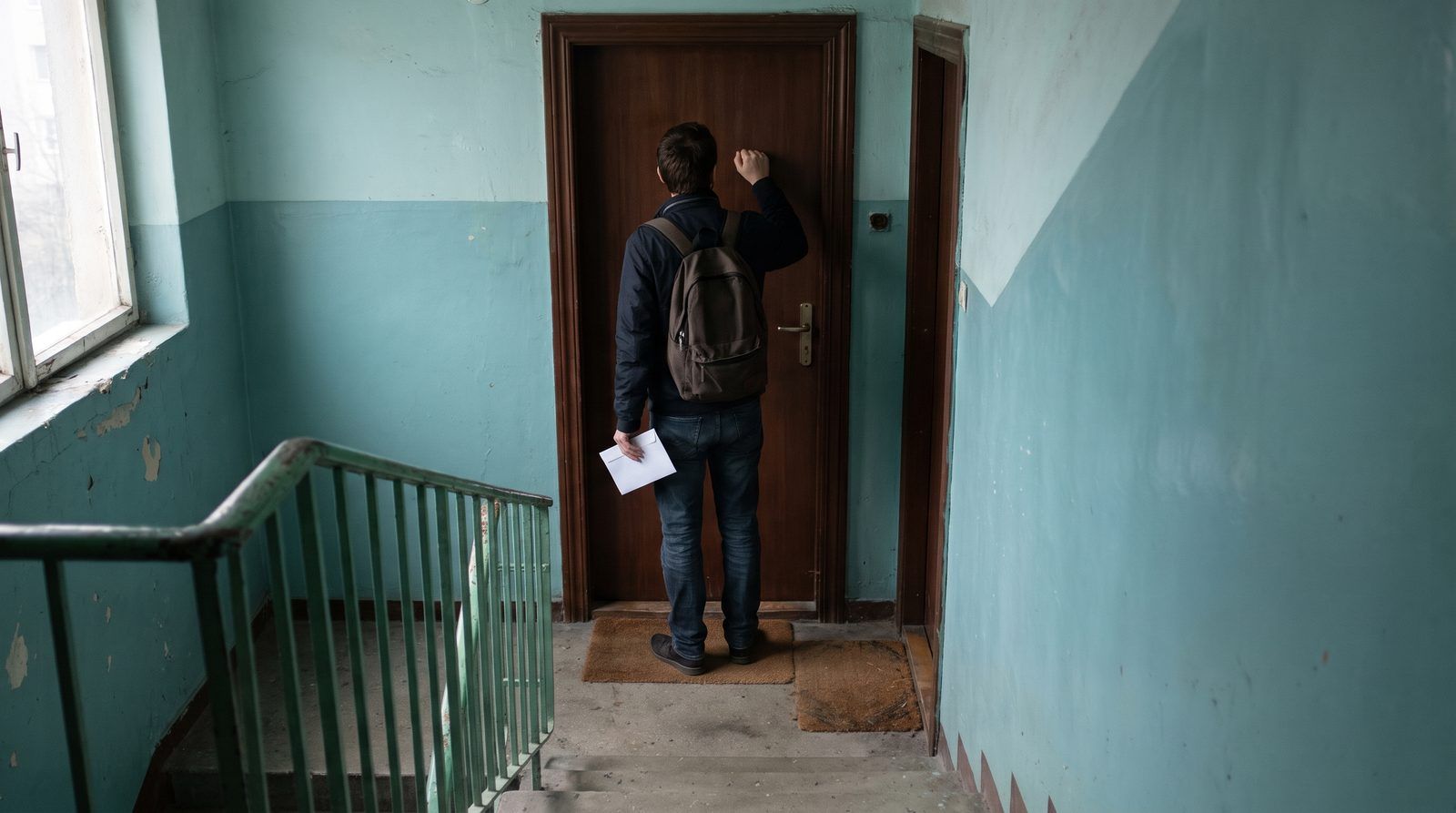
What to do when a tenant does not pay rent: from the first reminder to court and eviction, and which documents to keep so that you do not lose any options.
When a tenant does not pay rent, the owner's options follow a clear order: a written reminder, a formal demand, payment in installments or termination of the lease, the deposit, a court claim and eviction. Each one is available only if the document it needs already exists.
How strong each next step is depends on what the owner recorded at the start. If you document from the first missed day, you keep every option. If you start only in front of a court, the first months may turn out to be impossible to prove.
What should you do when rent is paid late?
When rent is paid late, first check that the money has really not arrived, then ask the tenant in writing when they will pay, and on the same day record the due date, the amount and the answer in one place.
Before you contact the tenant, compare what has arrived in your account with the due date in the lease. A transfer made on the due date may still be on its way, and a reminder about money that is already coming starts the conversation badly.
Ask in writing when the payment will arrive, by email or through the channel you normally use with the tenant. A call is fine as a first contact, but confirm it the same day with a short message that repeats what was said. A phone call leaves no trace, while a message the tenant has replied to remains.
The next step depends on the answer. If the tenant pays by the date they named themselves, note the payment and the delay and close the matter. If they name a date, record it as a promise: a broken promise is the clearest reason for formal action. If they do not reply, or reply without a date, send a formal demand.
When should you send a formal demand for payment?
A formal written demand is sent when the tenant misses a date they promised, stops replying, or the rent is still unpaid for a second month. The demand states the debt, the months it covers and a deadline for payment.
Each of these signals that the informal conversation no longer helps. If you wait longer, you keep the good relationship, but the debt grows and the weeks without a formal document pile up.
The demand should contain:
- the tenant's name, the address of the property and the date of the lease
- each unpaid month and the amount for it
- the total amount due
- a payment deadline and the bank account to pay into
- what you will do if the deadline passes
Deliver the demand in a way that lets you prove it was received. The law does not list accepted methods, but there are a few anchors. A notarial notice is the most reliable: the notary marks on it that it was delivered to the person it is addressed to. Email also works if the lease names the tenant's address as a channel for notices. An electronic statement counts as received when it reaches the mailbox named, but you must prove that you sent it and that the lease provides for this channel. A registered letter with a return receipt leaves a document showing receipt. A demand sent only in a chat may well be read by the tenant, but in a dispute that is hard to prove. Keep the copy of the demand together with the proof of delivery.
If the lease sets out its own procedure for notices, follow it exactly. A demand that departs from it gives the tenant a reason to challenge it later.
When should you agree to payment in installments?
Payment in installments makes sense when the shortfall is explainable and temporary and the tenant has paid regularly until now. It protects the owner only if it is set out in a signed addendum to the lease with dates, amounts and the consequences of a missed installment.
An installment plan keeps an otherwise reliable tenant and avoids a vacant period. In return the owner loses certainty: while it lasts the debt stays open, and if the tenant stops paying again the sum is larger than it was at the start.
Refuse installments if the tenant has already broken two promises to pay, cannot explain the shortfall, or also wants to postpone the current month's rent. In those cases ending the lease is the better route.
Set the plan out in a signed addendum to the lease. In it, describe the total debt as the tenant acknowledges it, each installment with a date and an amount, the express condition that the current rent is paid as before, and what follows if an installment is missed. The most useful line in the addendum is the acknowledged total: that way the tenant has confirmed the amount owed with their own signature. Mark every installment received in the payment register.
How is a lease ended for non-payment?
A lease is ended for non-payment by a written warning in which you give the tenant a suitable period to pay and state that after it expires you will treat the contract as terminated. The law calls this case rescission and regulates it in Article 87 of the Obligations and Contracts Act; when the contract is in writing, the warning must also be in writing.
Rescission stops the debt from growing, but it also stops the rental income, and the property stands empty. It works only going forward, so rent up to the day of rescission remains owed. If the tenant does not leave, a second problem follows: how to get the property back.
Rescind the lease instead of negotiating when the installment plan has not been kept, the tenant does not reply, or the debt is growing faster than a realistic plan could repay it. One limit: rescission is not allowed when the unpaid part is insignificant for your interest. A small remainder that is a few days late is not a ground.
First read the termination clause in the lease. Which clauses a lease should have is set out in the guide to what a rental agreement must contain. In some leases non-payment is expressly named as a ground and there is a notice period. Even when the lease is silent, the warning with a deadline under Article 87 is still available to you. The details on periods and notice are in the article on ending a rental agreement.
Fixed-term and open-ended leases end in different ways. Either party can end an open-ended lease with one month's notice (Article 238), without relying on non-payment. A fixed-term lease ends when the term expires, and before then only by agreement, under a clause in the lease itself, or by rescission for breach. There is more on both kinds in the article on the term of a rental agreement.
Deliver the termination notice in the same provable way as the demand, and state the date of the demand in it. If you rely on a demand the tenant did not answer, you will be able to show that the tenant was warned before the lease ended.
Can the deposit cover unpaid rent?
Yes, by set-off: it is made by a statement to the tenant, preferably in writing, and does not need their consent, as long as your claim for rent is due and its amount is determined (Articles 103 and 104 of the Obligations and Contracts Act). The rules on the deposit itself are mainly in the lease, so the safest course is for the clause in the lease to say expressly that unpaid rent is deducted from it.
If the clause speaks only of damage, discuss with a lawyer whether the deposit can also cover rent while the lease is in force. And if you use it during the tenancy, nothing may be left for damage found at handover, so it is usually safer to hold it until you have the property back.
Often the deposit is the only sum the owner still holds when the property comes back. That is also when damage is found, by comparing the property with the furniture inventory signed at move-in. If you have already used the deposit for rent, every scratch and every broken appliance becomes a second claim against a tenant who has not paid anyway.
Use the deposit last, after the handover inspection, when both the rent and the damage can be deducted from it with one written statement of account to the tenant. Keep together the deposit receipt, the clause, the signed inventory and that final statement. How a deposit is set up and what can be deducted from it is explained in the article on the rental deposit.
How do you collect a rent debt through the courts?
Unpaid rent is collected with an application for an order for payment under Article 410 of the Civil Procedure Code, filed with the district court at the tenant's permanent address. If the tenant signed the lease with notarised signatures, under Article 417, point 3 the court can order immediate enforcement and issue a writ of execution. This applies to the obligations contained in the document itself. How the notarisation works and what it gives you is explained in the article on notarising a lease.
The tenant can object to the order within one month and does not have to give reasons. The court then tells you to bring a claim, which you file within one month of the notice, paying the remaining court fee. If you miss the deadline, the order and the writ lose effect. With an order for immediate enforcement, an objection as a rule does not stop enforcement unless the tenant provides security.
The case rests on three documents: the lease, the payment register and the proof that the tenant received the demand. Before meeting a lawyer, put everything in one folder: the signed lease and all addenda, the payment register, the written correspondence, each demand with proof of delivery, and the termination notice if you sent one. With a full folder the lawyer works on the claim instead of reconstructing what happened.
Compare the amount owed with the cost of collecting it. The court fee is a percentage of the claim, and it is lower for the order-for-payment procedure than for a claim. If you win, the defendant reimburses the fees, costs and lawyer's fee you paid in proportion to the part of the claim that is upheld (Article 78 of the Civil Procedure Code). Ask the enforcement agent about their fees in advance. If the tenant has left and has no known income or property, collecting may cost more than the debt itself.
A tenant with a known employer or bank account is a different case. With the writ, the enforcement agent serves a garnishment notice on the employer or the bank and forbids them to hand the sums owed over to the tenant. Only part of a salary can be deducted, and at least the minimum wage always remains (Article 446 of the Civil Procedure Code).
Rent claims do not stay open forever: they lapse after three years (Article 111 of the Obligations and Contracts Act), which for each monthly installment runs from the day it fell due. Do not wait indefinitely for the tenant to bring the money themselves.
What should you do if the tenant will not leave?
If the tenant stays in the property after the lease has ended, eviction happens through a court judgment or another enforceable act and enforcement by an enforcement agent, not by changing the lock or cutting off the power.
The route runs through the termination notice with proof of delivery, then an enforceable title, and finally enforcement. The enforcement agent sets a day and time, notifies the parties and puts you into possession; if the tenant does not leave voluntarily, they are removed by force (Article 522 of the Civil Procedure Code). It is disputed whether an order for immediate enforcement can be used to hand over real estate; discuss it with a lawyer. Without proof that the lease has ended, there is nothing to enforce.
There is also a point that is easy to miss. If the lease has expired and the tenant keeps using the property with your knowledge and without your objection, the lease is treated as extended for an indefinite term (Article 236 of the Obligations and Contracts Act). If you object, the tenant owes compensation and must keep performing all the obligations under the lease. So object in writing.
Taking matters into your own hands can put an owner with a strong claim in the weaker position. Changing the lock, cutting off the power or water and removing the tenant's belongings can amount to taking the law into your own hands under Article 323 of the Criminal Code, which is a criminal offence. The tenant can also claim compensation for the damage caused to them (Article 45 of the Obligations and Contracts Act), however much they owe.
When you get the property back, by agreement or through enforcement, document its condition the same day: dated photos of every room, the electricity and water meter readings and, if the property is on district heating, the heat meter, together with a check against the furniture inventory. These documents start the settlement of the deposit and the damage. How the check is done is explained in the article on the handover report.
What should you document from the first day of the tenancy?
Five documents kept from the start of the lease decide what options the owner has when rent is not paid: the payment register, the written correspondence with the tenant, the proof of delivery of demands, the signed addenda and the furniture inventory. Each is described below as: when it is created, what it proves, and which step uses it.
- Payment register. Kept at every due date, whether or not a payment arrives. It proves what is owed and when it went unpaid. It is used for the formal demand and for the court claim.
- Written correspondence with the tenant. Created on the day of every conversation or message. It proves what the tenant knew and promised. It is used for installment plans and in court.
- Proof of delivery of demands. Created when each demand is sent. It proves that the tenant was warned. It is used for termination, in court and for eviction.
- Signed addenda. Created at every change to the terms of the tenancy, including installment plans. They prove the sum the tenant acknowledged. They are used in court.
- Furniture inventory. Drawn up at move-in and checked again at handover. It proves the condition of the property. It is used to settle the deposit.
The payment register is the easiest to skip, because it seems that the bank statement replaces it. It does not: the statement shows what has arrived, but not what is owed, when it falls due and what the tenant promised in the meantime. Transfers without a clear reference also do not show which month they are for. Ask the tenant to name the month in the payment reference of every transfer.
In Smarter Facility, online rent payment shows, for each property, which installments are upcoming, due, overdue and paid, and a payment in cash or by bank transfer is recorded separately. If the register is kept there from the first month, it does not have to be reconstructed when a dispute starts.
When is it time to turn to a lawyer?
An owner whose tenant has stopped paying needs a lawyer before ending the lease, filing a claim or starting eviction, and as soon as the tenant disputes the debt in writing; reminders, demands and installment plans you can manage yourself.
This article is general information, not individual legal advice. For a specific lease or case, consult a lawyer.
Frequently asked questions
- What should you do if the tenant pays only part of the rent?
- You do not have to accept a partial payment, because a creditor cannot be forced to accept performance in parts (Article 66 of the Obligations and Contracts Act). If you accept it, record it in the payment register as partial and confirm in writing that the remainder is still owed and by which date. Without such a written note, the sum may later become disputed. For the unpaid remainder the same demand steps apply as for any unpaid rent.
- What should you do if the tenant leaves without paying?
- When the tenant leaves without paying, the debt remains, and the lease still shows who owes it. Keep the lease with the identity details in it, for example the tenant's name and personal ID number, the last known address and any contact details they used. If their current address is unknown, the court asks for a check of their address registration and serves the papers by posting a notice, or, where there is no registration either, by publication in the State Gazette; in both cases it appoints a special representative at the claimant's expense. An order-for-payment procedure, however, is not opened if the tenant has no permanent address or habitual residence in Bulgaria.
- Who pays the utility bills the tenant left unpaid?
- Whom the provider will pursue depends on the contract for the service in question. For heating, the clients by law are the owners and holders of a right of use (Article 153 of the Energy Act), so the heating company comes to you, and you claim from the tenant under the contract between you. For electricity, water and internet, check whose name the account is in and what the provider's general terms say. If you paid an amount that was the tenant's to pay, add it to the claim against them and support it with the bills and the meter readings from the day you got the property back.
- Can you charge interest or a penalty for late rent?
- First check the lease: a penalty clause for late payment agreed in writing is the clearest ground for claiming more than the rent. A court can reduce a penalty that is excessive compared with the loss (Article 92 of the Obligations and Contracts Act), and an excessive clause can also be void for offending good morals. If there is no such clause, the statutory interest remains. It is owed from the day of delay, and when the due date is fixed, delay begins after it passes without any demand (Articles 84 and 86). Its rate is set by the Council of Ministers and changes, so check it on the day you calculate it. In both cases, note every day of delay in the payment register.
- Do the terms of the tenancy change if you accept a late payment once?
- A contract is changed only by mutual agreement of the parties or on a ground provided by law (Article 20a of the Obligations and Contracts Act), so one late payment does not by itself change the due date. If you accept late payments repeatedly, though, the tenant may argue that you agreed tacitly, and the answer is not clear-cut. In practice, act the same way every time: whenever you accept late rent, confirm in writing that the due date in the lease still stands, and note the delay in the register.