
How to prepare an apartment for rent
September 2, 2026 · By Smarter Facility
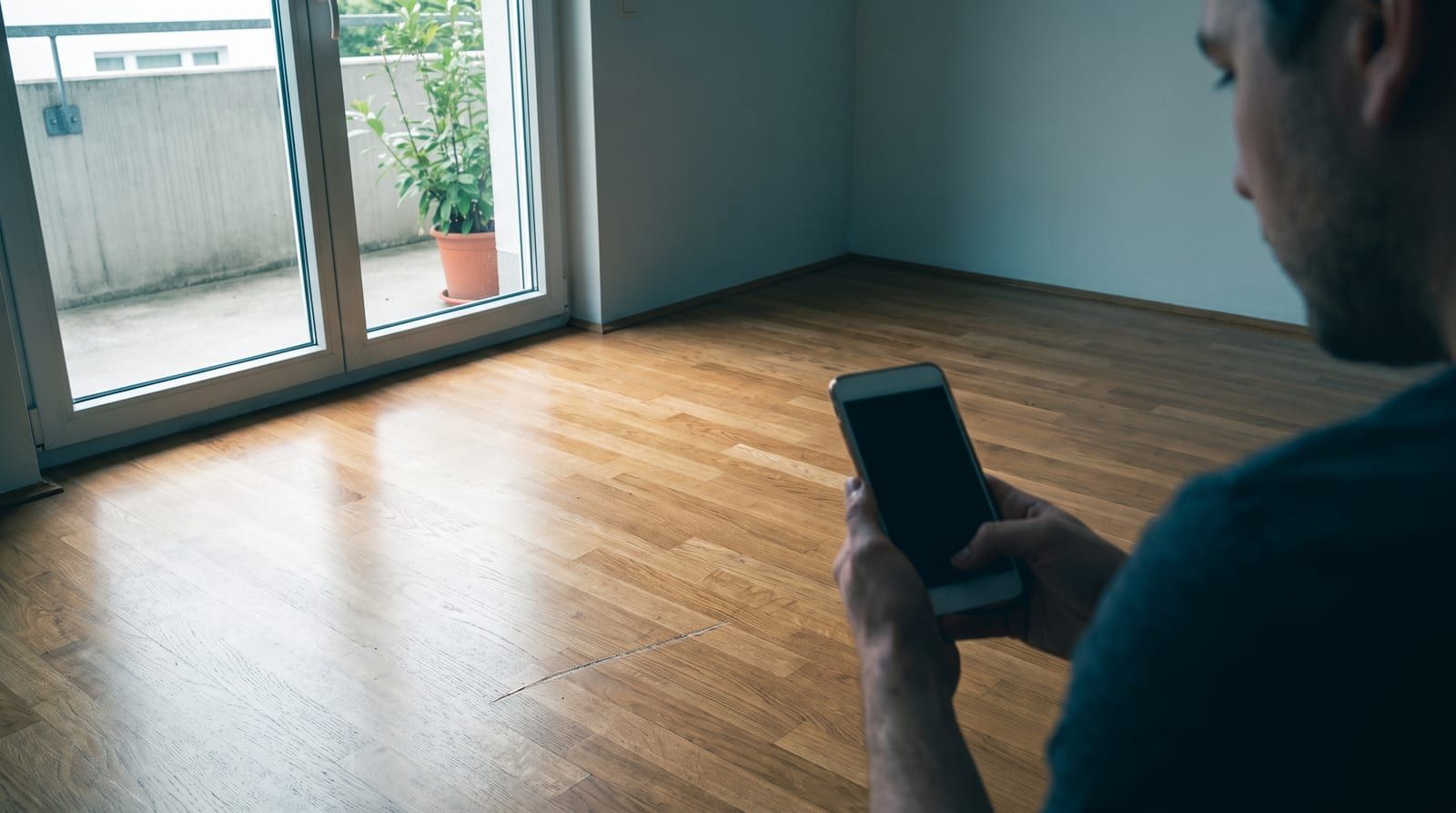
Which defects to repair before the tenant sees the place, what to leave behind, what has to work on handover day, and how to record the condition of every room while the apartment is still empty.
Preparing an apartment for rent ends where the condition of the place can be proved. Three decisions carry the rest: which defects get repaired before the tenant ever sees the property, what stays in the apartment after you move your own things out, and what gets recorded about the condition of every room while the place is still empty. Cleaning and photos come last and are the smallest part of the work.
What has to be finished before the listing goes up
Everything that needs an empty apartment is finished before the listing: structural repairs, plumbing and electrical work, painting, and the deep clean. The photos are the last step of the preparation, not a stage of their own.
It all comes down to access. A plumber who has to move a tenant's furniture works slower and charges more. Work that involves water, dust or the power switched off is hard to fit around someone who already lives there. Once the job reaches walls, floors, pipes or wiring, it belongs in the empty period.
Only short, reversible jobs inside a single room can run alongside a live listing: swapping a light fitting, a new door handle, hanging a mirror, fitting a curtain rail. The apartment still looks the way it does in the photos, and the viewings do not stop.
The order matters most between painting and photography. Shooting before the last coat is the most common way to do the work twice: the listing shows scuffed walls, the apartment shows fresh ones, and the photos get retaken with a viewing already booked. Paint first, then clean, then photograph, with nothing in between.
Heating and hot water are worth finishing early, even though nobody looks at them during a viewing. Those systems get tested in October by a tenant who has already moved in. A boiler that fails in the first week turns a new tenancy into a complaint before the first payment.
What to repair before renting out, and what to leave
Repair what gets worse with daily use, replace what is at the end of its life, take out what you do not want to argue about, and point out the rest openly and price it into the rent.
Repair covers the damage that starts in one place and reaches another. A dripping tap leaves limescale, then a stain on the cabinet below. A window that will not close leaves damp on the reveal. A loose tile lets water under the screed. In each case the defect is small on handover day and is not small twelve months later, and by then there is no way to separate the oversight from the tenant's use.
Replace applies where a repair leaves the item in an unclear state. A boiler at the end of its life, already patched twice. A washing machine that runs but shakes. A sofa with a broken frame under sound upholstery. The scenario is specific: the repair is poor, the item breaks a few months later, and neither you nor the tenant can show whether the cause was age or use. The deposit is then decided by whoever can prove what condition the item was in at the start.
Take out is the least used option. The coffee table with the glass top, the rug you like, the wardrobe with a door that only opens if you lift it. Anything you would regret getting back damaged leaves the apartment before the tenant arrives. Taking it out costs half a day. Leaving it costs an argument with someone whose rent you need for a year.
Point out covers the cosmetic and the permanent: scratched parquet, a hairline crack in a tile, a discoloured worktop, the marks left by the previous kitchen. No repair is needed here. What is needed is that these things are visible in the photos and mentioned at the viewing, so nobody wonders later whether the scratch was already there.
Furnished or unfurnished, and what each choice puts on you
A furnished apartment lets faster and to a wider set of tenants, and every item in it becomes something you maintain and answer for. An unfurnished one lets slower and narrows the condition record down to the property itself.
Furnished places change tenants more often. People who move in without belongings move out again more easily, and every new move-in means another clean and another check against the furniture inventory. Unfurnished keeps a tenant longer, because leaving costs them more.
Between the two sits the choice most owners make: the kitchen, the white goods and the cabinets stay, and everything soft and personal goes. The choice makes sense. These are the items a tenant cannot easily bring along, and at the same time the ones whose condition is easy to describe.
For personal belongings the rule is simple: leave an item only if you would replace it without complaint. If the answer is no, it goes to the basement, to a relative, or into storage. The problem shows up when one expensive item sits among cheap ones. An inherited dining table in a room otherwise furnished from a chain store. A real rug. A working coffee machine. Their value stays invisible to a tenant who uses them like everything else in the apartment, and their loss is entirely visible to you.
What has to work on handover day
Heating and hot water, every socket and switch, every tap and drain, the windows and the doors with their locks, a key for every lock, and the meters. Each of them is tested in front of the tenant on handover day, not a week earlier.
Test in a fixed order so nothing gets skipped. Water first: run every tap hot and cold, fill and drain the sink and the bath, flush the cistern twice. Then electricity: every socket with a charger or a lamp, every switch, every light fitting with a working bulb. Then the heating, whatever the season, brought up to temperature at least once. Doors and windows last: lock and unlock each one separately, from the inside and from the outside where that makes sense.
Keys are counted, not assumed. One set per adult tenant. Every key is tried in its own lock in front of them: the apartment door, the building entrance, the mailbox, the basement, the parking barrier if there is one. A key that does not work is a locksmith on handover day. The same key discovered three months later is a tenant who no longer believes the apartment was handed over properly.
Meter readings cannot be reconstructed later. Read the electricity, water and heat meters on handover day, photograph every display, and write the numbers down with the date. A reading taken the following week is not the reading at handover, and the difference is somebody's bill.
What is left is access to the building rather than to the apartment: the entrance door code, the intercom, where the rubbish goes, which day the building is cleaned, who the building manager is and how to reach them.
How to record the condition of the apartment before move-in
Record the condition of the apartment while it is empty and clean, room by room, before anyone moves in. The record is four things: dated photos, a furniture inventory, the meter readings, and a list of the defects you decided not to repair.
This is not the handover protocol. The protocol is signed by both sides on handover day and says what the two of them agreed. The record is what you prepare beforehand, and the protocol is then written from it. Owners who skip it end up drafting the protocol in the hallway while the tenant waits, which is how you get a document that says "in good condition" and nothing else.
Photograph the defects, not the rooms. A wide shot shows the layout and that is all; it settles no argument about a particular stain. A close shot of the scratch that runs across the parquet by the balcony door, with something in frame for scale, shows what it looked like and where it was. Take the wide shot too, one per room, but the close ones are the shots that get used later. Every photo needs a verifiable date, which means the file date has to survive: photos sent through a messenger and downloaded again usually lose it.
The furniture inventory is a list of items, not of categories. "Living room furniture" is not a line. "Sofa, three-seater, grey upholstery, two stains on the right cushion" is. For each item: what it is, where it is, what condition it is in, and what is already wrong with it. For appliances, write the brand, and the model too if the sticker carries one. How to build such a list line by line is covered in how to write a furniture inventory for a rental property.
The defects you decided not to repair go on a separate list, and each of them also appears in the photos and on the line for the item concerned. A defect shown at the viewing and missing from the written record is, twelve months later, a defect that appeared during the tenancy. The readings from handover day go into the same record, next to the photos of the displays.
Keep the record somewhere other than your phone as well. Phones get lost, replaced, and restored from backups that drop old albums without warning. A year later, at the moment the tenant disputes a deduction from the deposit, the record has to be findable by room and by item.
The record only works if it can still be found after the tenancy ends, and found by item. Property management in Smarter Facility keeps every property as its own profile and lets documents and photos be uploaded and stored with it, instead of scattered between a phone, an inbox and a drawer, so the condition record sits where the property itself sits.
The handover protocol itself, and what it contains at signing, is a separate subject. The whole path from deciding to let the place to a signed agreement is covered in how to rent out an apartment step by step.
The order to do all of it in
Work in one direction: decide, repair, furnish, clean, test, record, photograph, list. Every stage depends on the one before it, and a stage taken out of order gets done twice.
- Walk the apartment and sort every defect into repair, replace, take out, and point out. Make the list before you call anyone, because the list decides who you call.
- Wet and structural work first: plumbing, electrics, anything that reaches walls and floors. This is the stage that leaves dust.
- Paint after the dust. Painting before the plumber means painting twice.
- Move furniture in and out. Whatever is going, goes now; whatever stays, gets arranged now.
- Deep clean, after the furniture has been moved rather than before, because moving it marks the floors.
- Test everything: water, electricity, heating, locks, keys.
- Record the condition: photos, furniture inventory, list of defects. The apartment is empty, clean and finished, and this is the only moment when the record is worth making.
- Photograph for the listing, in daylight, with the apartment in exactly the state the tenant will receive it in.
- Publish the listing.
Steps 7 and 8 are two different shoots with two different purposes. The listing photos sell the apartment. The condition photos protect the deposit. Do them on the same day, in that order, and keep them in different places.
Frequently asked questions
- Do I need to repaint if the walls are clean but in a strong colour?
- No, if the paint is sound and the colour is on one wall only. Yes, if the whole apartment is in a colour the tenant will want to change, because permission to repaint then enters the negotiation, and the decision about what goes on the walls is no longer yours.
- Who pays for something that breaks in the first month?
- It is decided by the cause, not by the timing. Damage that was already there at handover, or that comes from age and wear, is the landlord's cost. Damage from the way the item was used is the tenant's. The condition record is what makes that difference provable, which is why it is made in advance.
- Can I leave personal belongings in a locked cupboard or in the basement?
- Only if the rental agreement expressly excludes that space and the tenant has no need to access it. A locked cupboard inside the apartment creates friction regularly. A separate basement with its own key works, as long as it is written into the agreement and the tenant is not paying for it.
- What if the tenant wants to move in before the work is finished?
- Write down what is unfinished, who will do it and by when, and agree access for the work in advance. Reduce the rent for that period or push back the start date. A tenant who moves into an unfinished apartment at full rent starts out feeling that you owe them something.
- How many condition photos are enough?
- The number comes from the apartment, not from a target set in advance: one wide shot per room, one close shot of every defect on the list, one of every meter, and one of the sticker on every appliance. A missing photo cannot be added later.